
Maine Fly Fish

If you haven’t read it already, the first Educated Angler blog post was about dry fly fishing. The basics of dry fly fishing are explained without going into “too much” detail, and some of my tips that I’ve picked up over the years are included.
Before I go into the second post about streamer fishing, I’d like to wish everyone a Happy New Year. Life is short. Life is challenging. Too often we’re spending our precious time doing chores or other activities that we don’t enjoy. Forget the weight loss goals. Make it a point to just get outside on the water more this year. Take that trip you’ve been putting off. Get out on the water with your loved ones. Go camping and just disconnect from the fast moving world for a few days. Make the time to explore new places or revisit old haunts. Show off your awesome spots to people close to you who are always wondering what it is you’re doing. And if you want to lose weight, take as many hikes as possible into those small mountain streams and go nuts catching beautiful, wild trout.
Streamer Fishing
Similar to my first post, this will mostly apply to fishing in rivers, but many of these techniques and patterns can definitely be applied to lakes and ponds. These tactics can be applied to both fishing from the bank or fishing from a boat or raft. We don’t typically “bang the banks” here in Maine. We fish a lot of seams (where fast water meets slow water) and pockets (spots behind rocks or other structure). There are definitely times to fish the banks (high water stages), but typically fish don’t hold here due to lack of food flow and security from predators. The beautiful thing about streamer fishing in rivers is that it can be very, very easy. Even if you can’t cast far, you can just let the river take over for you. I’ll explain what I mean by that in the coming Streamer Techniques section.
Equipment
If you’re targeting trout, salmon or bass that are going to be bigger than 13 inches, you’ll want to fish a 6 or a 7 wt rod. When targeting larger fish, you typically want a little more casting power and some more beef to your rod. A large arbor reel to hold your line and some more backing is ideal. I’m not partial to any brands, but get something that will hold up. You’d be amazed how many times you drop your rod and the reel will crack on a rock or it get stepped on the chaos of landing a fish.
For fly line you have three options. If you’re going to be fishing water that doesn’t get much deeper than about 6 feet, you’ll be fine with a floating line. There are specific floating lines with shooting heads that would be more ideal if you were just going to fish streamers. Rio has a Big Nasty line that turns over the heavy streamer flies very well and allows you to get some more casting distance with ease. From a floating line, I like to fish a 9 foot leader generally in 2x or 3x. I wouldn’t use a blood knot or a surgeon’s knot if I’m fishing streamers. I’d use a loop to loop connection because it has a ridiculous 98% breaking strength, as compared to around 60% for the blood or surgeon’s knot. The disadvantage to this knot is that it’s easier to get tangled up on if you’re casting a lot, but you don’t really need to make delicate/precise casts when fishing streamers so I’d highly recommend it.
If you’re fishing waters from 6 to 12 feet deep, a sink tip line is the way to go. You’ll get great distance out of a sink tip line because of the shooting head on the line (more weighted in this section). When fishing a sink tip line I use a 4 to 5 foot section of 12 pound monofilament. Maxima Chameleon is a great choice. The reason you only need a few feet is because the sink tip is getting done there for you. A longer leader will only complicate your casting and will actually take the fly longer to get down into the strike zone.
On a larger river where you know you’ll be fishing deep, water a full sinking line is a good bet. Depending on the size of your rod, you’ll want to look at different “grain” lines. For instance, a 5 weight line generally matches up with a 160 grain line, which has a shooting head length of 22 feet. A 7 weight line is 240 grain, which has a shoot head length of 24 feet. Again, I’d go with a 4 to 5 foot section of Maxima Chameleon for the leader.
For almost all streamers, I go with a non-slip loop knot. It gives the fly a little more action, and when you have a streamer in the water, you want action. Check out the link here for the non-slip loop knot:
Streamer Techniques (includes casting)
So, now the fun part. I love fishing streamers because there’s no one right way to do it. Generally if I’m fishing from close to the bank, I’m looking to cast my fly into the edge of faster water and have it “come out” into the soft, slower water on the side. Again, this is called the seam. Fish hold here because they don’t have to expend a lot of energy to hold and they can dart in and out of the fast water to go after food, or food will often come whirling out of the fast water and into the slower water.
You do NOT need to cast upstream when fishing streamers. You can either cast your line straight out in front of you or even downstream of you at around a 45 degree angle. As soon as your line in the water, there are two things you need to do. The first is to put your fly line in your casting hand against the cork section of your rod. This is essentially your drag system and keeps your line tight. If you have slack in your fly line, you won’t feel the fish take the fly and you won’t be able to set the hook into their mouth. The second thing is that your rod tip should always be in the water. About one inch under the surface is perfect. The reason for this is that you’re eliminating slack by keeping your line as close to the water as possible. You want to be able to feel every little thing, and you can’t do that with slack in your line.
Now, you’ve made your cast and your fly is floating down the river. What do you do now? Well, this is where you have options and need to experiment to see what fish like. The first thing I always do is just let the fly float right down the river naturally until it gets below me. Let the river just take your fly over. Make sure you throw a big mend in your line so that your fly is floating “dead drift”. Dead drift means that your fly is moving at the same exact speed as the current. Before I move spots, I like to change up techniques. I’ll throw 5 or 6 casts and let it just dead drift down. If nothing happens, I’ll make that downstream cast at a 45 degree angle and try some different stripping techniques as it swings across the current. Remember, it’s always important to follow your fly line with your rod tip to eliminate any drag. I like to now try several different stripping techniques, like strip-strip-stop, strip like hell, bumping my line or snap jigging. I should mention that it’s vital that you are using your non-casting hand to perform the stripping actions mentioned. To see a tutorial of these various stripping techniques, watch this video from Rio:
Fly Patterns
For me, streamer fishing is what I do the least of because you throw a lot of casts without catching “tons” of fish. You’re throwing cheeseburgers at the fish, and they don’t sit eating cheeseburgers all day. Most trout are just like people. They’ll consume a few big pieces of food throughout the day, but really love to eat a lot of small pieces of food (think of how many almonds you’ll eat to fill you up versus eating steak and cheese sandwiches). To eat streamers, fish have to move and work to catch that prey. Whether you’re imitating a fleeing smaller fish, a crayfish, a leech or an injured baitfish, the trout generally have to move to eat these flies. Like people, they don’t want to work hard for their food and they want to just snack all day (like eating potato chips). Fish are just a bunch of couch sitting potato chip eaters, and that’s why nymph fishing is so important (that’s my next section).
The one advantage to streamer fishing is that the fish that you do hook are going to almost always be bigger fish. I’ve had days where I’ve cast streamers all day and only caught two or three trout, but they’re almost always 15 inches or longer. To keep it simple, if you want to target large fish, throw streamers. If you want to catch a lot of fish, dries or nymphs are the right way to go. This isn’t always the case, but most often this is a good rule of thumb.
Fish in Maine generally eat streamer patterns that imitate smaller baitfish, leeches, crayfish, sculpins, smaller stocked fish, and bigger nymphs (like stoneflies). Here is a list of some patterns that I like to use, but remember, this is just my take on it. There are lots and lots of streamer patterns that work, so feel free to poke around and try out different patterns. I’m always trying new streamer patterns, and more often than not I’ll have success on them, so don’t just stick to one list. I use more than what I’m listing, but these are some basic options to get you started.
Leeches:

*Photo courtesy of Tim Flagler of Tightline Productions

*Photo courtesy of current-works.com
Baitfish:
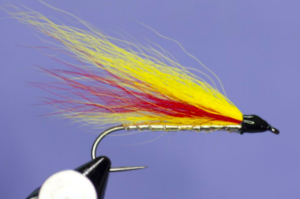
*Photo courtesy of flies-stepbystep.com

*Photo courtesy of globalflyfisher.com
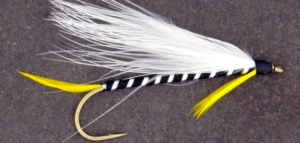
*Photo courtesy of streamers365.com

*Photo courtesy of rangeleyflyshop.com
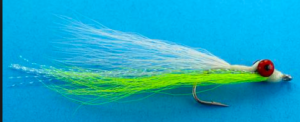
*Photo courtesy of dryflyonline.com
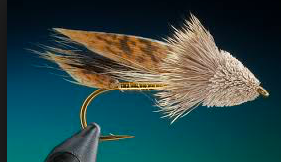
*Photo courtesy of thefeatherbender.com

*Photo courtesy of slideinn.com
Crayfish:
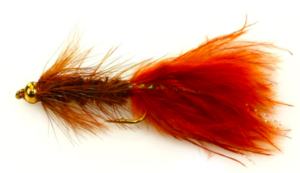
*Photo courtesy of thesessentialfly.com
*Photo courtesy of fishusa.com
Sculpins
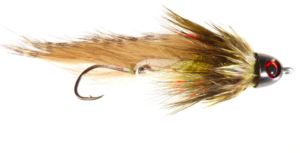
*Photo courtesy of flyfishusa.com
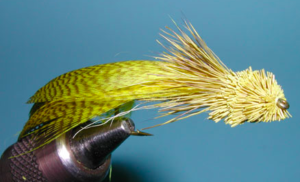
*Photo courtesy of stevenojai.tripod.com
Big Nymphs
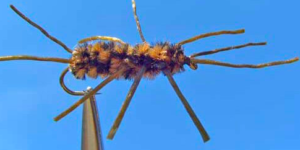
*Photo courtesy of thesanjuanangler.com
Aaron Broaddus
