

Maine Fly Fish
Welcome back to another blog post from the Educated Angler. If you haven’t, go check out the previous posts on dry flies and streamers!
Although the point in this blog is to educate beginners on fly fishing strategies and techniques, some of these topics could be beneficial to the experienced angler as you might find something new to put in your toolbox.
Fishing Emergers
This topic is one that I wish I could have come across early in my fly fishing career. When the conditions are right, this is probably the easiest way to catch a trout or salmon. There are some key observations that let you know that fish are taking emergers, and to be honest, often times they will just jump on your fly if you just leave it sitting out just under the surface. You’ll often feel a little tug of war and a hook set is not even always needed, which sounds odd I know.
You might be asking: What is an emerger? Well, caddis, mayflies and midges all have a part of their life cycles where they are in an “emerging” stage. These bugs start off as larva (what you often hear called nymphs) and as their life cycle progresses, they swim up to the surface to shed their outer layer so that their wings can emerge. These bugs can take anywhere from seconds to many minutes to shuck that layer and get up to the surface. Just breaking out of their skin is a tough enough process, but trying to break through that surface water is very difficult for them. The bugs are often vulnerable and they are sitting ducks for fish to pick off! This is why emergers can be so effective to fish.
I think these images below of different bug life cycles might be helpful, so when you’re seeing or hearing terms like caddis, midge, pupa, stonefly, etc. you’ll have an idea of what that means.
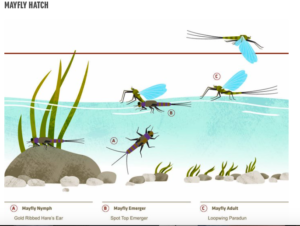
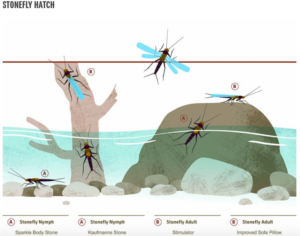
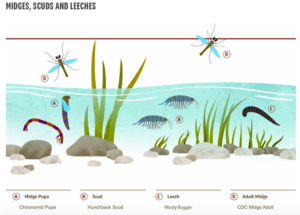
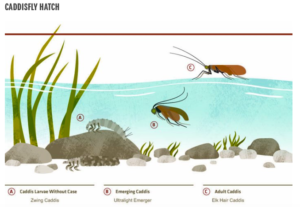
*Diagrams from www.redington.com
Equipment
I like to use similar equipment for fishing emergers as I do when fishing dry flies. Usually a 4 or 5 weight rod with floating line and a 10 or 11 foot leader gets the trick done. It’s important not to use stiffer tippet like 2x or 3x on your emerger pattern because you want it to have as much movement as possible when it’s floating under the surface. I haven’t talked a lot about what brands I like to use because I don’t want to promote any ONE brand, but I use a lot of Orvis and Redington rods. Sage is another favorite of mine, and I’m sure if I owned a Scott rod I’d jump on that train as well. At the end of the day, the brand doesn’t make a huge difference (to me) when fishing a 4 or 5 weight rod. This may be because I don’t need to make 50+ foot casts all day, therefore many rods are pretty forgiving.
I will say that I don’t love aluminum reels. They tend to crack or chip pretty easily when banged against a rock. I’ve had two Redington reels crack when stepped on (I know.. I shouldn’t be stepping on my equipment, but stuff happens). The Sage and Orvis reels that I own seem to hold up better. I don’t fish many L.L. Bean products mostly because I’m not impressed with their fly fishing gear and the fishing department at their flagship store in Freeport is not helpful because they don’t carry that much stuff. Better to support your local fly shop anyways! There’s my rant on brands.. I won’t do much of this in my blog posts because we all have different experiences and differing opinions.
Techniques
So you’re on the water and you fish rising. How do you know if they’re targeting dry flies versus taking emerger bugs? It can be so frustrating to see fish rising and you’re floating dry flies over their heads with no action. An easy way to distinguish between the two (but not always) is to watch the reaction of the fish when they are eating. For instance, if you just see a nose poke through and it creates a gentle ring, the fish is likely eating a bug on top of the surface. Figuring out what dry fly to fish is what I’d do at this point. If you see a splashy rise (make sure it’s not just a little fish porpoising out of the water) then this is likely a fish eating an emerging bug. Remember, in rivers most fish are holding on the bottom, so they are swimming up at a fast rate trying to catch this bug before it escapes onto the surface. They’re swimming so fast that they often break the surface and create some commotion before heading back down to the bottom. This is a likely sign that emerger patterns will work.
Like streamers, you’ll hear about swinging emergers. This just means that you cast downstream at around a 45 degree angle, drop your rod tip and follow your line until it is directly below you in the river. Make sure to keep your line tight as you do this, and you’ll often feel a little tug in the other direction. This is a fish. The hard part now is setting the hook because you can’t set it in a downstream direction. Fish point upstream in a river, so setting the hook downstream is ideal. Either way, you still need to keep your fingers pinched on your line, keep your line tight and raise up on your rod tip. This doesn’t need to be an aggressive hook set, just a nice tight line with your rod tip going up until it’s about eye level. When swinging emergers, I will fish two emerger patterns with the bottom one tied to some tippet off the hook bend of the first fly. I love fishing like this because it’s not super visual, and it’s all about feel.
Another way to fish emergers is tying an emerger pattern off of a dry fly. I usually tie 4x or 5x tippet to the bend of the hook of the dry fly with an improved clinch knot and tie the emerger about 18 inches from the dry fly. By doing this, you’re helping take the guess work out of figuring out if they’re taking emergers or dry flies. You’ll most likely hook up at the end of your drift or right at the point when your dry fly starts to drag.
A very effective way to fish emergers is attach an emerging pattern to the hook bend of a nymph pattern. When I like to fish the bottom and the top, I’ll put a standard nymph (prince nymph, pheasant tail, caddis larva) as my first fly and like I did with the dry fly, I’ll drop the emerger about 18 inches off the hook bend of that nymph. This way, I drift my nymph pattern along the bottom, and as my strike indicator gets to the end of the drift, I drop my rod tip and the flies rise to the surface. I’ll get hookups on this strategy quite often, but believe it or not, I’ll catch many fish with my emerger pattern while dead drifting it on the bottom.
You want to target riffle sections, tail ends of a long pool, or seams behind rocks when using emergers. They can be really tough to use in slow water, but when you see fish making splashy rises in really slow water you’ll want to cast from above the fish (upstream) and strip your emerger slowly (or quickly) back upstream. Sometimes the water is slow that you need to manipulate it and make your own action. I almost always use an emerger when I’m not hooking up, and it usually changes my fishing experience pretty quickly. I don’t know why I don’t start out with them more!
Fly Patterns
Perhaps what I love most about emergers is that they’re usually very easy to tie. You’ll lose a lot of them in a season, so it’s good that they don’t take much time to tie. Some patterns are as easy as threading the whole hook shank and wrapping a piece of partridge feather on the front of the hook. There are TONS of variations of emerger patterns, but the list below are flies that I’ve found to be successful.
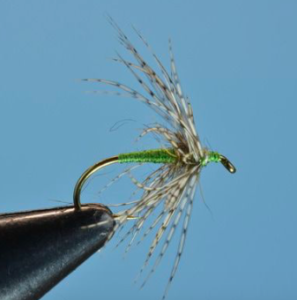
*Photo courtesy of clackamasflyfishers.org
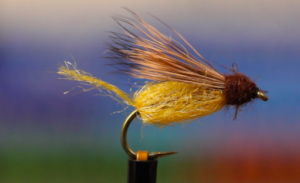
*Photo courtesy of Tim Flagler of Tightline Productions
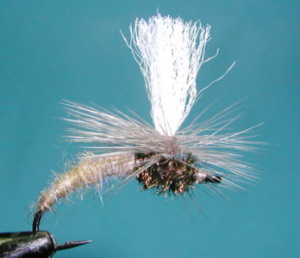
*Photo courtesy of Tim Flagler of Tightline Productions
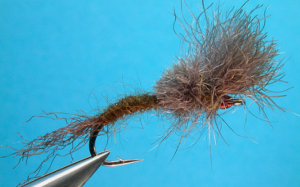
*Photo courtesy of flytierspage.com
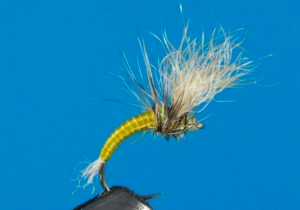
*Photo courtesy of hatchesmagazine.com
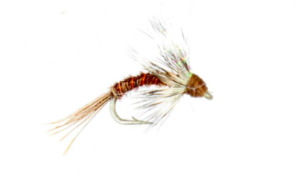
*Photo courtesy of catchflyfish.com
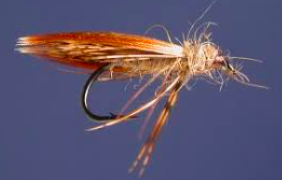
*Photo courtesy of invictaflies.tripod.com
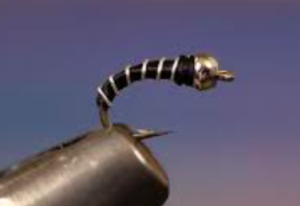
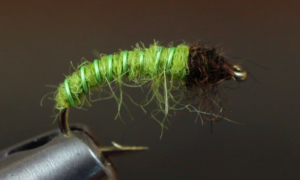
*Photos courtesy of Tim Flagler of Tightline Productions
Aaron Broaddus
