

Maine Fly Fish
On the morning of December 3rd, the thermometer read 22 degrees, with a high of just 34 expected for the day. Most anglers had long retired their fly rods in favor of ice fishing, but I wasn’t ready to give up yet. Brandon Bichrest of maineflyguide.com, a trusted friend and guide, had an ambitious plan: to land a northern pike on the fly in December. A long shot, sure—but for anglers like us, that’s half the fun.
The night before, Brandon had texted me with a caveat. His son wasn’t feeling well, and if he had to stay home from school, the trip might be off. Still, he suggested I bring my trout rod as a backup. He had a lead on a river holding unusually large salmon, the result of a miscommunication between a dam keeper and a biologist. A silver lining, perhaps, if the pike didn’t cooperate.
Gearing Up
I called my son Jax, who was meeting me at 6:30 a.m., and told him to pack his trout rod while I handled the pike gear. As I pulled into Jax’s driveway, Brandon texted again—his son was going to school, and the trip was on. We had two hours to meet him at the boat launch, and the day was shaping up to be a good one: no wind, bright skies, and high hopes.
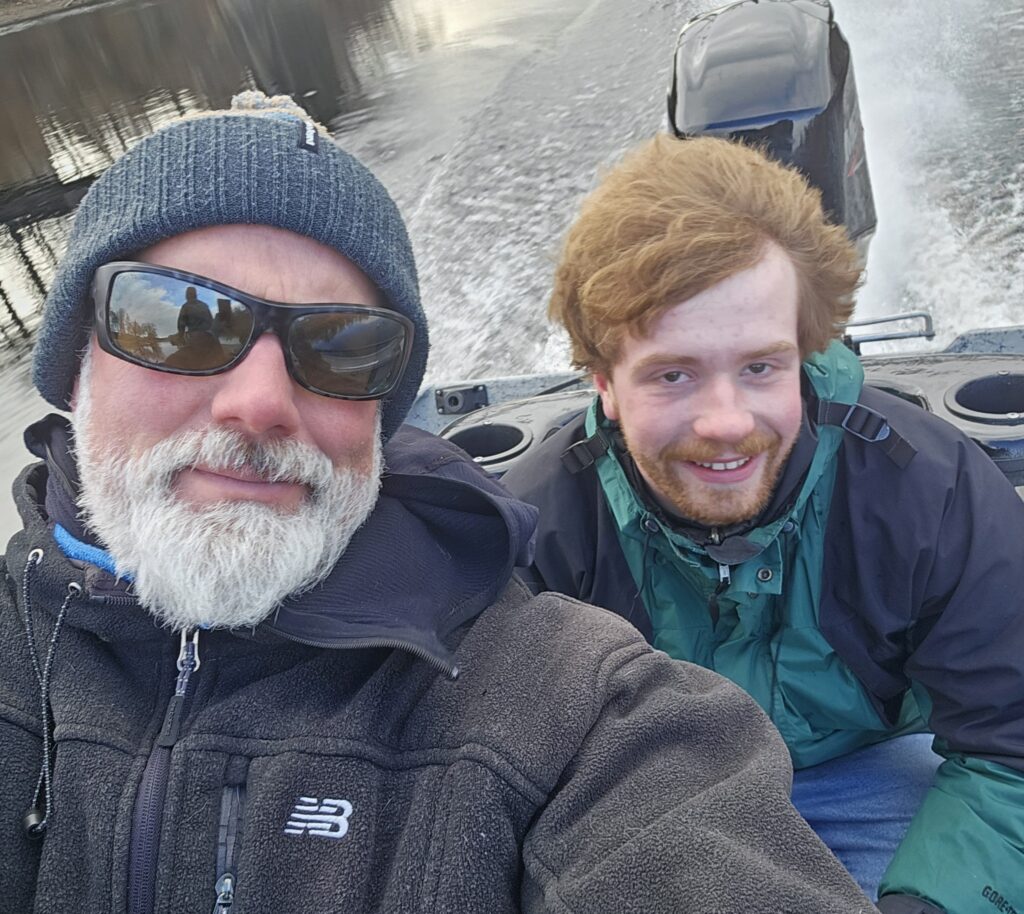
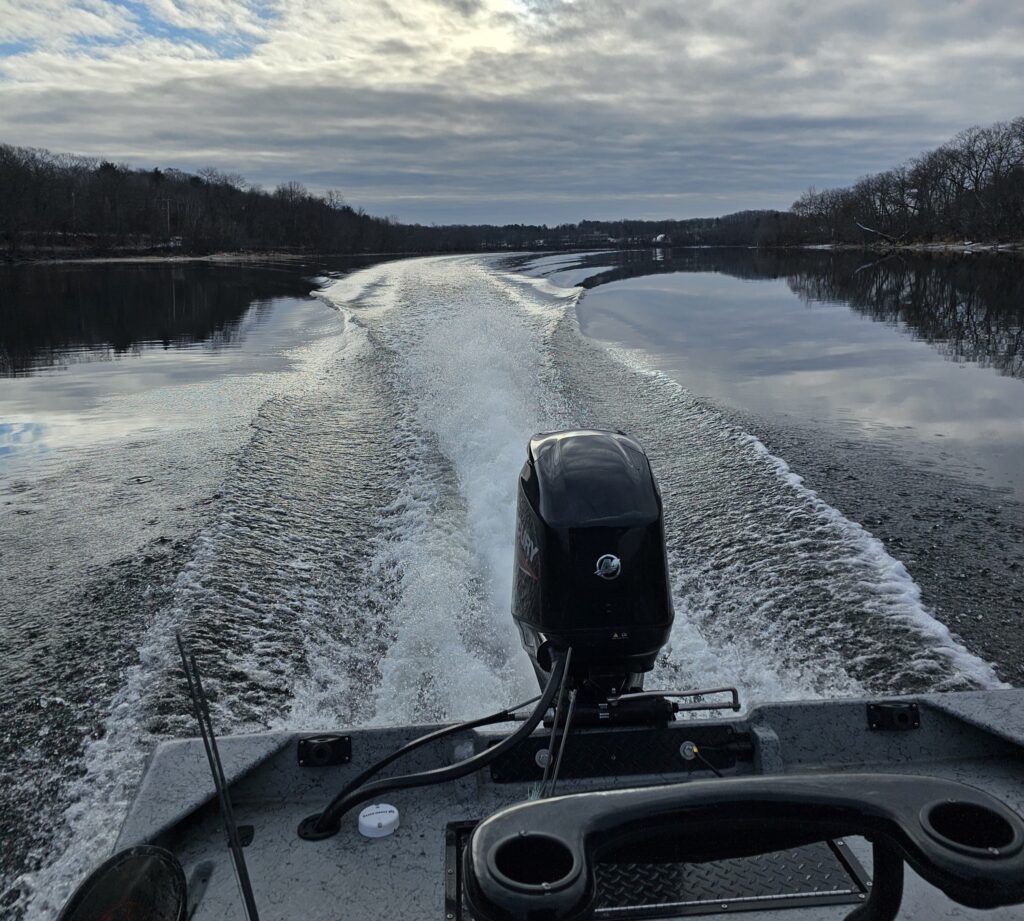
By the time we arrived, the temperature had dropped to 28 degrees, and the cold felt sharper by the water. Brandon had already launched his new boat and was waiting for us, grinning. Before long, we were jetting upriver, ready to target one of Maine’s apex predators.
Northern Pike: Maine’s Misunderstood Giant
Our first stop looked promising. We stripped out our lines and began casting. It didn’t take long for excitement—Jax shouted, “Fish on!” But as quickly as it came, the fish was gone. At first, he thought he’d snagged bottom, but the “snag” started moving. Pike fishing requires a strong strip strike, sometimes two, to drive the hook into their notoriously hard mouths. Lesson learned, we got back to casting.
As we worked the water, our conversation turned to Maine’s controversial relationship with pike. Brandon shared what he’d heard: northern pike don’t typically breed until they’re around 11 years old. Killing the largest fish forces younger generations to spawn earlier, leading to population booms that overwhelm ecosystems. I’d also heard that removing big pike allows smaller fish to mass-produce unchecked, creating even more crowding. Larger, older pike act as natural regulators, keeping populations in balance.
We agreed that managing pike as a trophy fishery could benefit both anglers and the local economy. A strong pike population would attract more out-of-state anglers, filling guide schedules, lodges, and restaurants. Done right, it could be a win-win for Maine.
Despite our efforts, the pike eluded us. By 11:30, we faced a choice: stay and grind it out or head to the salmon spot, an hour away. We opted for the move.
The Backup Plan: Salmon and Trout
After a few pit stops, we arrived at the river. As we rigged our rods and pulled on waders, a fellow angler approached, reporting success with small midge patterns. Brandon recognized him as a former client, and while they caught up, Jax and I headed downstream.
It didn’t take long to spot fish. I saw a large salmon, about 18 inches, rise to inspect my fly but then drift away, uninterested. Frustrated but determined, Jax and I hiked upriver in search of more active fish.
Breaking through the woods, I spotted a huge salmon on the far bank in shallow water, with a brook trout sliding in behind it. My heart raced as I waded into position, trying not to spook them. Sight fishing has its perks—you can see how the fish react to your fly—but it also tests your patience. After several fly changes, I accidentally foul-hooked the salmon and snapped my leader while trying to release it.
A December Reward
We pressed on to one of my favorite runs. As we approached, I noticed a figure on the opposite bank. “Dan?” I called out. Sure enough, it was my old friend. He crossed over, reporting a productive morning with several big salmon and trout to hand.
The four of us—Brandon, Dan, Jax, and I—focused on a stretch of gravel where brook trout and salmon were holding. Dan eventually headed home, and Brandon moved downstream. I tied on a soft hackle streamer I’d recently tied, casting to where I’d seen salmon moving earlier.
It didn’t take long. Before Brandon had gone ten feet, my line went tight. The fish exploded out of the water—a massive landlocked salmon, easily over 20 inches. Brandon’s intel had been spot on, and I landed my first December salmon.
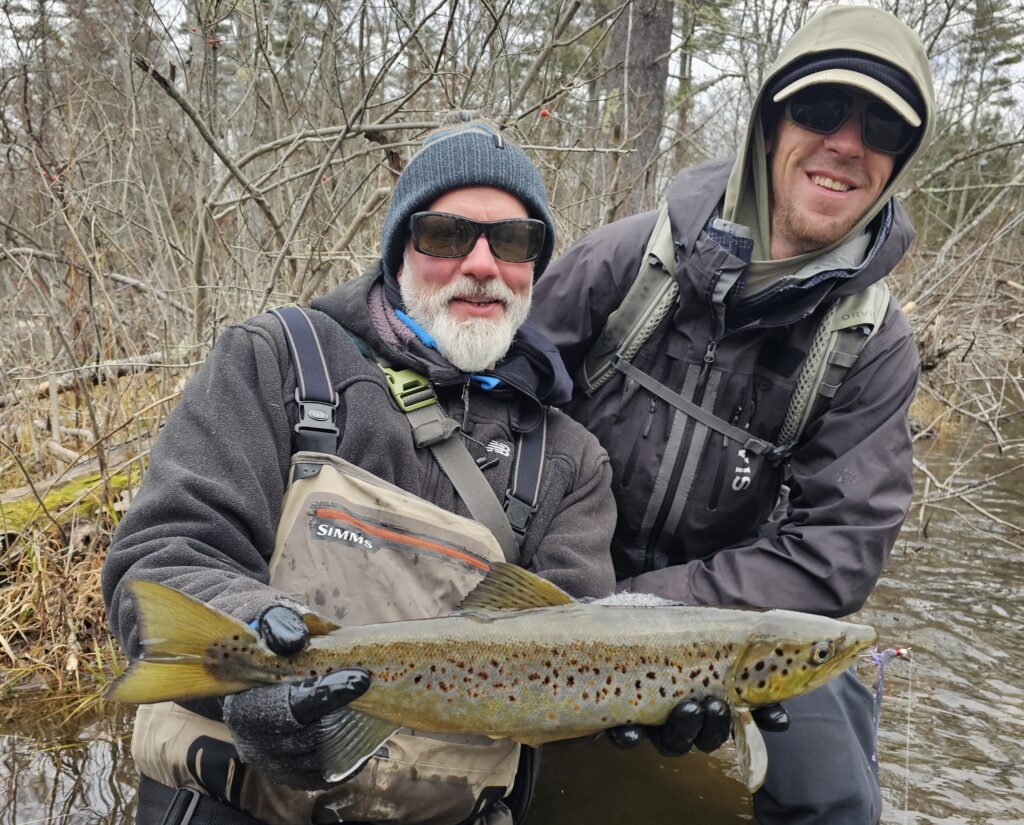
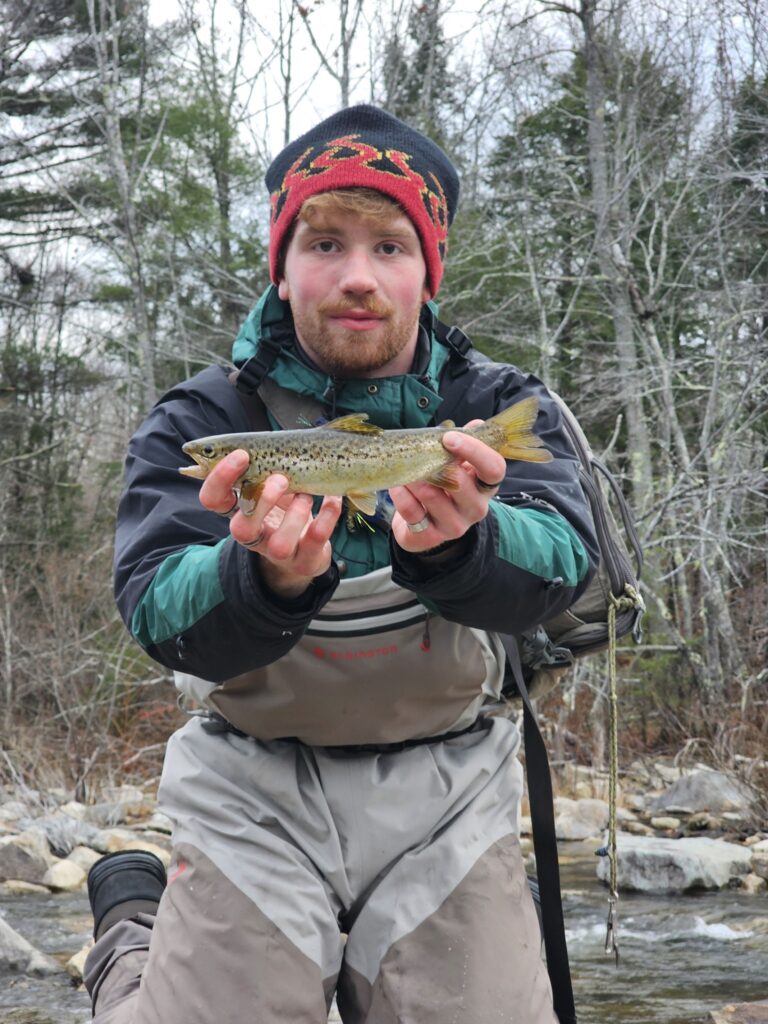
For the next hour, the three of us continued working upriver. Jax landed a salmon, and we each hooked into a few more but couldn’t bring them to the net.
Why Winter Fishing Matters
Winter fly fishing isn’t for everyone, but for those willing to brave the cold, it offers incredible opportunities. The solitude is unmatched, with fewer anglers on the water, and Maine does an excellent job stocking rivers to keep the action going year-round.
So, don’t put your fly rod away just because the snow has fallen. Some of the best days on the water happen when the world is quiet, the air is crisp, and the fish are still biting.