
Maine Fly Fish
Northern pike were illegally introduced into the Belgrade Lakes in the 1970s, and since then, they’ve dramatically changed the landscape of fishing in Maine. These toothy predators wiped out populations of salmon and trout in the Belgrades, and the state has spent decades trying to eradicate them—with no success. Now, pike are found throughout the state, both from that original illegal introduction and from others that followed. Despite state efforts, these fish have flourished, and because they grow to impressive sizes, fishermen have embraced them, chasing giants ever since.
As a fly fisherman, I’ve found pike to be second only to musky in terms of difficulty on the fly. Some days we’ll land 30 fish; other days we only get one or two. It’s all part of the chase.
When I was growing as a fly angler, I began targeting a variety of species, and pike soon made it onto my bucket list. For years, I’d give them just one shot a season—right at ice-out—because that’s what I had read and been told. But year after year, I had no luck. That all changed when I decided to try in May, when the water had warmed into the 50s. That’s when I started hooking and landing pike on the fly. Since then, I’ve been chasing them for over 15 years.
My personal best on a fly rod is a 39.5-inch northern, taken on a pattern I designed myself. I’ve yet to break the 40-inch mark, but I’ve had multiple clients hook into true giants and lose them just before the net.
I’ve found that only a certain kind of fly angler is really successful with pike. You need to be able to cast a heavy fly on an 8- or 9-weight rod—often into the wind—because pike are typically in the shallows only during spring and fall, as they are cold-water fish despite what many people think. Most days, we’re throwing sinking lines and flies ranging from 3 to 10 inches long. You really need to be able to cast 50 feet to cover enough water effectively.
Recently, I guided two fly fishermen from Cape Cod, Michael and Robert—a great duo. They fly fish for stripers and albies right in their backyard and travel the world chasing saltwater species. They know how to cast, and more importantly, they know how to strip-set.
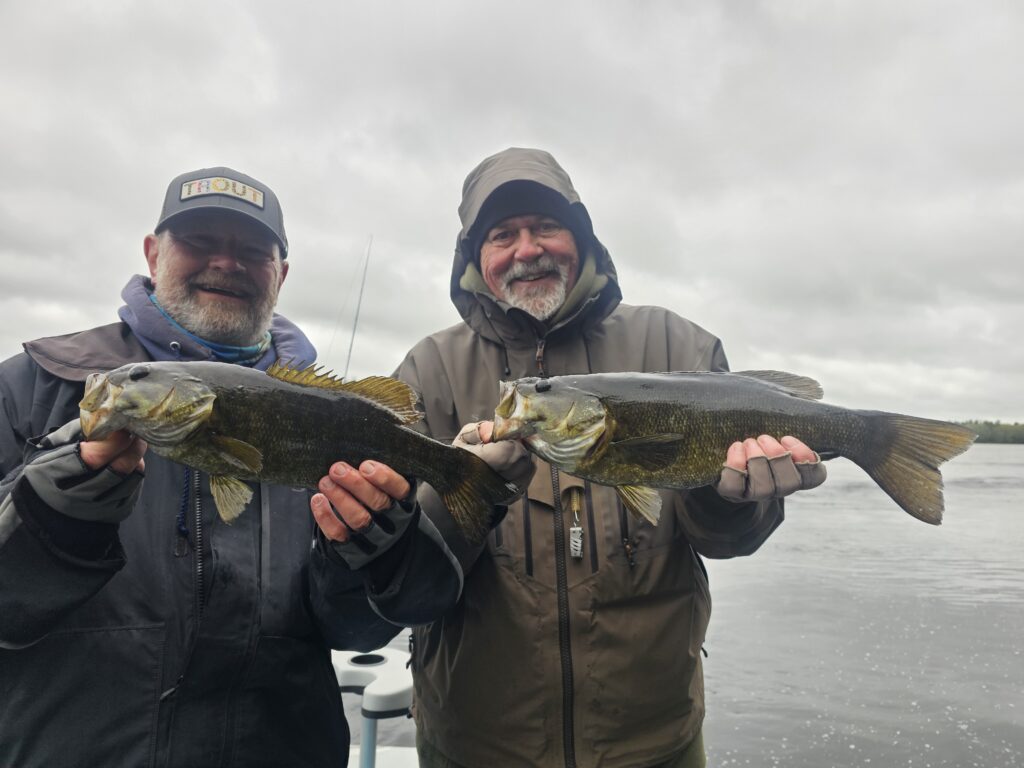
They came up for five days. Day one, we chased smallmouth and landed around 50. The next two days, we headed north in search of musky. It was a solid trip—Robert landed a musky, but Michael didn’t even see one. He was understandably disappointed, but things were about to change.
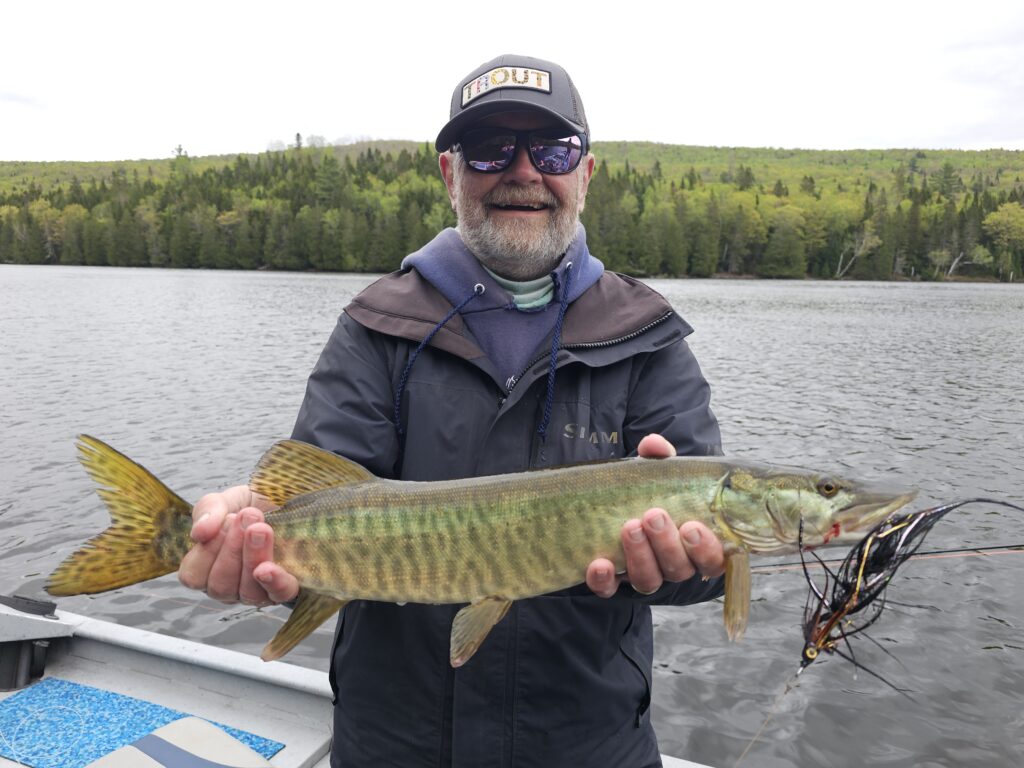
Days four and five were when things really came alive. We turned our attention to northern pike. Driving back from musky country, we saw the weather forecast calling for a Nor’easter—heavy rain in our area and snow in western Maine. The weatherman was right.
Day four brought perfect pike weather: overcast skies and no wind. It turned out to be Michael’s day. He had tied some flies specifically for this trip, including a perch pattern—and it turned out to be the hot fly. As we started working the weed line, he hooked a pickerel, but chaos soon followed.
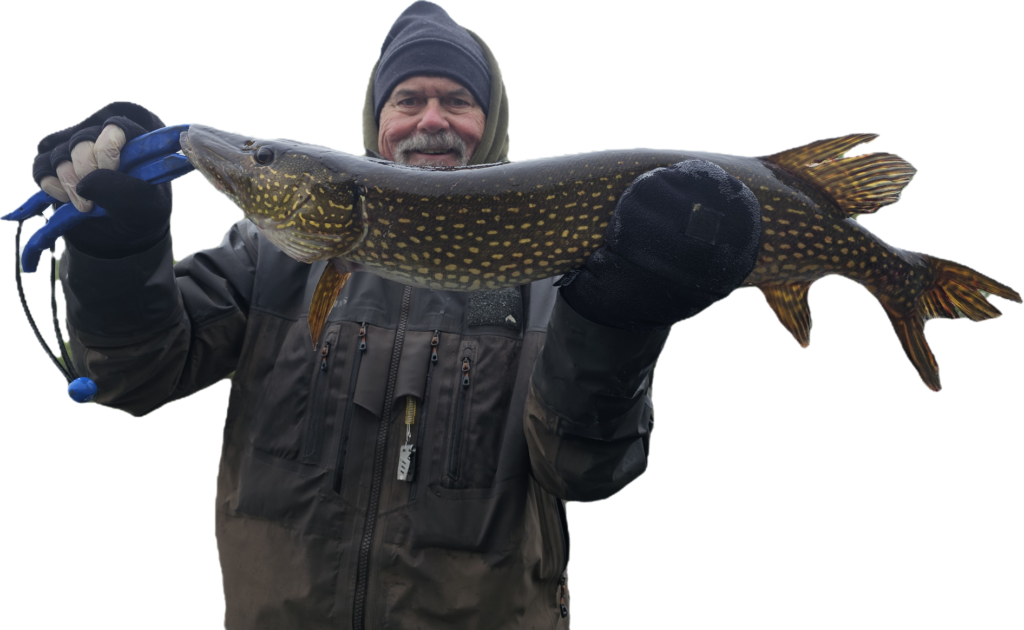
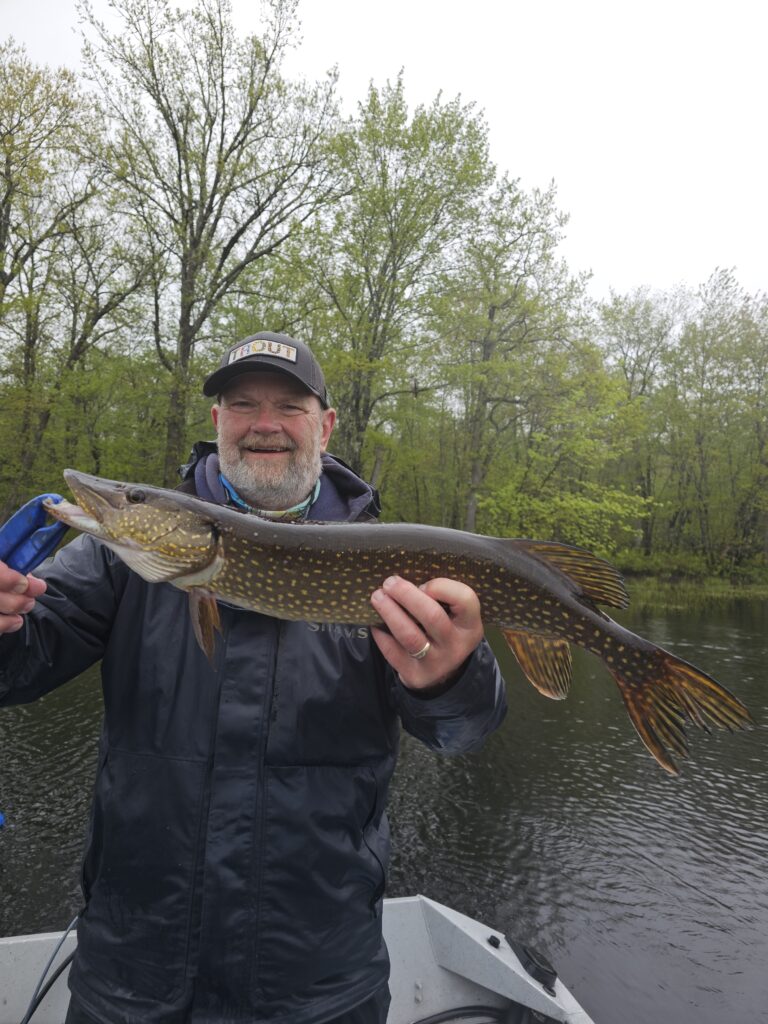
At one point, he was stripping his fly in while distracted and looking around. I saw the take and yelled, “Set! Set! Set!” He strip-set hard and was soon into a big pike. Line ripped from the reel, and moments later, he landed a beautiful 34-inch northern. After high fives and photos, we released it to swim again. But he wasn’t done yet—shortly after, he caught a 33-inch pike. Robert landed a 30-incher, and we must have put 30 or more pike in the boat. What a day!
Day five, we were on a mission to break the 40-inch mark. I didn’t expect high numbers, but I figured we’d see at least a couple more fish. The plan was simple: thoroughly work a shallow, weedy flat. Michael tied on his perch pattern from the day before, while Robert used a fly I had tied with similar colors.
I let them work one end of the flat, then had them shift and cover new water. We picked up a pickerel early, then had a long lull—cast after cast with no action. Eventually, Robert said he’d had a bump—maybe weeds or a bass. We kept moving.
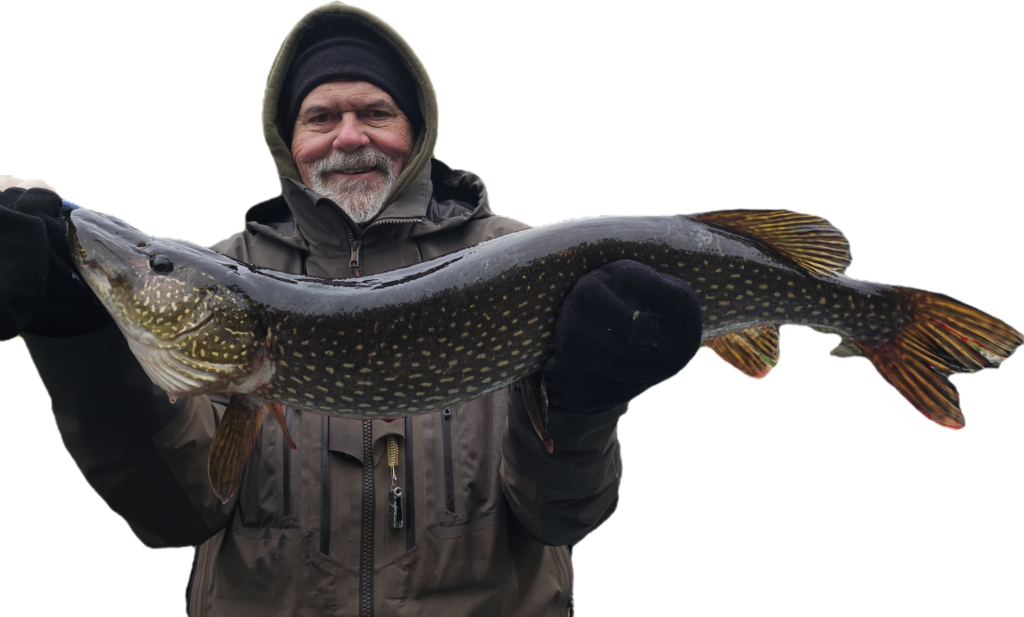
Then Robert said, “I’ve got one.” At first, it didn’t seem like much—just another fish—until it came boatside. That’s when we all realized: this was the one. The fish tail-walked across the surface and ripped out line. Thankfully, I had brought my musky net, because this pike was massive—thick-bodied and powerful.
It took Robert four attempts to bring it to the net, but we finally landed it. The excitement was off the charts. We measured it: 39 inches. Just shy of 40—but this fish was built like something out of Canada or Alaska. It was an absolute tank.
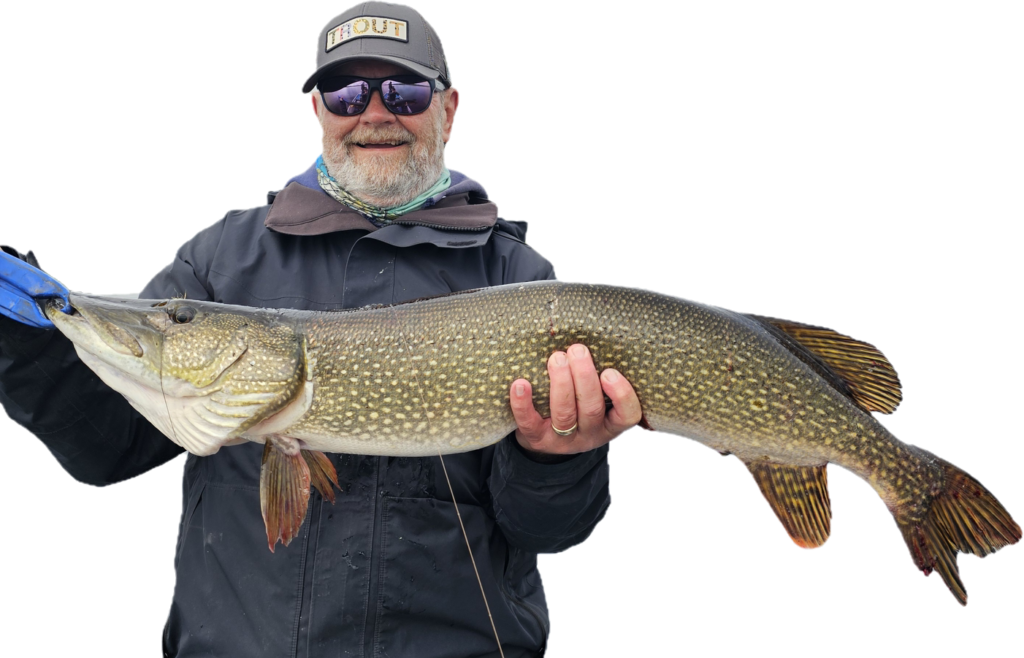
That elusive 40-inch mark still haunts us, but I know they’re out there. I have friends who’ve landed 45- and 46-inch pike right here in Maine. It might not have the reputation yet, but I believe Maine could become a serious pike destination in the years to come.
So, get out there and chase your trophy. You don’t have to go to Alaska or Saskatchewan. We’ve got them right here in Maine.
