

Maine Fly Fish
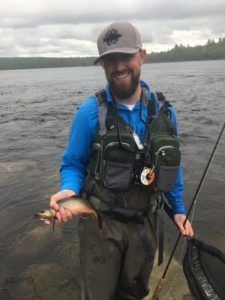
My name is Aaron Broaddus. I’ve been a MFF member since 2010 (aaronb11), and have been fly fishing all over Maine for the past 13 years. Call it what you want. Addicted. Dedicated. Obsessed. I love to fly fish! Not a day goes by that I don’t think about some aspect of fly fishing several times. I prefer to target trout and salmon, but smallmouth and stripers are new species that have had my attention in the summer months in southern Maine. Being a middle school teacher allows me a good amount of time off in the summer. What better way to spend it than on the water. I’ve been guiding fly fishers in western and southern Maine for the last five years. Many folks, even Mainers, have no idea that we have large, healthy populations of brook trout, landlocked salmon, smallmouth and striped bass. I mean… how crazy is it that you can be fishing for stripers at dawn and hooking brookies in the mountains at dusk?
Kevin approached me about writing a blog for beginning anglers, and I welcomed the opportunity without hesitation. This website is an incredible resource, not just for people looking to fish in Maine, but for folks looking to learn how to get better on the water. If you search the archived forum posts, I’d challenge you to find a topic that hasn’t been covered by lots and lots of fine anglers. If you ever have a fly fishing question, whether it’s a newbie question or an advanced topic, throw it out there and you’ll most likely receive genuine, valuable answers.
Most of my blog posts will revolve around trout and salmon fishing in rivers and ponds, but I’ll definitely throw in some smallmouth techniques from time to time because floating down a river in the summer sun and hooking aggressive fish is just too much fun to pass up!
Dry Fly Fishing
The first topic that I’m going to speak on is dry fly fishing. Not only is it the most visually pleasing way to fish, but it allows you to see how your fly presents itself. Many of the lessons learned dry fly fishing apply to fishing subsurface, so by becoming a skilled dry fly angler you’re setting yourself up for success when fishing nymphs and streamers.
When you arrive at the river it’s hard not to just jump in the water and start casting, but when trout are really active (think June – September) I like to just sit and watch the surface for a little while. Watching fish rise and break the surface can tell you a lot. First of all, you’ll be able to see where they like to hold. Fish hold in all different kinds of water in rivers, but structure like rocks and logs and riffles are good places to start. Fish want to hang in what are called prime lies. Prime lies are spots where fish can hold without having to use a lot of energy (avoiding fast currents), having an abundance of food floating by, and helping them hide from predators.
Watching rises can also tell you a lot about what a fish is feeding on. If you see a subtle rise then they’re most likely taking dry flies on top. If you see a splashy rise then they’re probably taking an emerging bug looking to flee to the surface and begin its journey with wings. Our waters here in Maine aren’t super clear and can often be hard to see bugs floating on, but with a careful eye you can see mayflies floating or caddis and stoneflies bouncing around. Take your time before entering the water.
Equipment
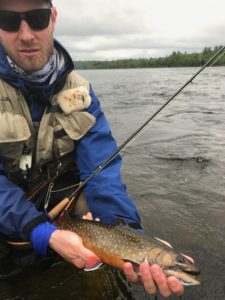
It would probably be good to mention gear needed for dry fly fishing for trout and salmon. You can’t really go wrong with a 9 foot rod in either a 5 or 6 weight setup. These are very general sizes and can help you land anything from a 6 inch trout to a 22 inch smallmouth. You’ll want a good floating line that will last, so don’t go cheap on this. A 9 foot leader with 3 foot section of tippet tied on covers most of our medium and large rivers, as well as ponds and lakes. I prefer to tie a blood knot for the leader to tippet connection, but a double surgeon’s knot or a loop to loop connection are also popular options.
Fly Patterns
I could probably write three pages about what flies to use, but generally we see a lot of different caddis patterns starting in May and going through October. Caddis is KING here in Maine.
Elk Hair Caddis
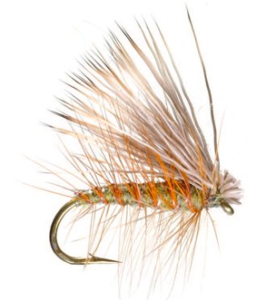
*Photo courtesy of yellowstoneangler.com
Poly Caddis
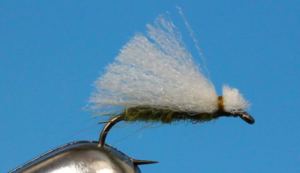
*Photo courtesy of wapsifly.net
Slow Water Caddis (like Hemingway’s Caddis)
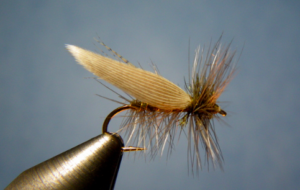
*Photo courtesy of johhkreft.com
X-caddis
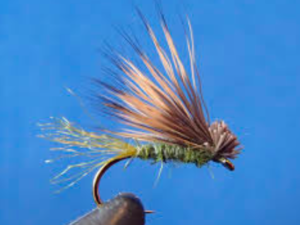
*Photo courtesy of hammercreekflyfishing.com
Klinkhamer
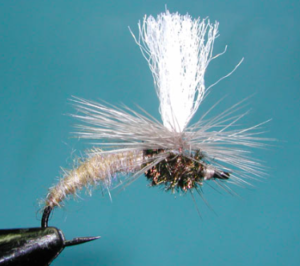
*Photo courtesy of stevenojai.tripod.com
Mayfly hatches start right around Memorial Day and go through September. Not all waters see the same hatches, but Hendricksons are usually the first big hatch followed by drakes then sulphurs. Mayflies and caddis get lighter as the weather gets warmer (but not always). Black caddis and dark mayflies make their presence felt often in the heat of summer. Greens, browns and blacks are good bets for June and tans, yellows, and whites are good as summer progresses.
Hendrickson Dry
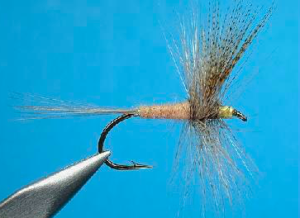
*Photo courtesy of midhudsontu.org
Stonefly hatches can be awesome when you hit them right in the months of June, July and August!
Kaufmann’s Stimulator
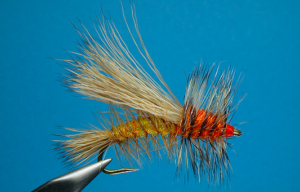
*Photo courtesy of flytierspage.com
Bugmeister
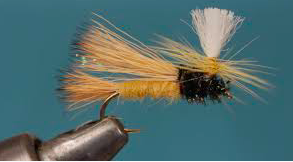
*Photo courtesy of Tim Flagler of Tightline Productions
Madam X
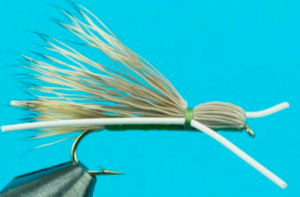
*Photo courtesy of bigyflyco.com
Chubby Chernobyl
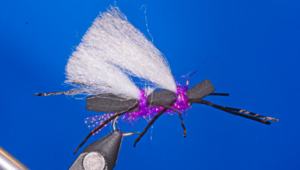 ]
]
*Photo courtesy of johnkreft.com
As July and August start getting on, smaller dry flies are generally the ticket, but an occasional fish will still eat the big dries. Don’t forget about mouse patterns during low light periods! This list goes on……
Casting
Alright, so you’ve got the right gear, you’re seeing fish rising and you have a decent idea of what they’re taking. Now, it’s time to cast and present the fly correctly. I love to teach beginners how to use a roll cast. It’s simple, effective and gets the fly generally where you need it. You don’t always need the long 40+ foot casts. 10 to 15 feet is easy to accomplish with a roll cast and if done correctly can put the fly right where you need it. There are five casting presentations, but the most common presentation is up and across. This means that you cast upstream at about a 45 degree angle and let your fly drift past you until it’s downstream of you (if you don’t hook a fish!)
Now, it’s important that you follow your fly with your rod tip so that you don’t create drag. Drag is created by either having your fly line too far upstream or downstream from your fly, and it either pulls it across the water at an unnatural speed or it stops the fly and sends it back upstream. When you make the correct cast the fly will land upstream of the fish, and as your fly comes back downstream you want to strip in your excess fly line so that you remove slack. When a fish takes your fly, you want as little slack as possible in the fly line to help you set the hook correctly in the roof of their mouth.
If you’re fishing close to you (within 10 feet) I like to show people how to high stick. This means that you’re keeping all of your fly line off the water, which helps eliminate drag, by holding your fly rod up even with your shoulder. If you do this and keep your rod in alignment with your fly, you’ll rarely have to worry about drag. If the cast needs to be further out in the river, and goes across varying currents, you’ll need to use a technique called mending. Mending means that your line has landed on the water, and you use your rod tip and a flick of the wrist to send your line (but not your fly) back upstream. This eliminates drag and puts your fly in the best situation to keep that drag-free dead drift downstream that fish love to see so much.
Roll cast and high stick. This is the easiest way to get into your first fish on a dry fly.
When your fly is in the water, I constantly tell folks to keep their fly line pinched against the cork section under your casting hand’s index and middle finger. The reason for this is that you don’t allow the fish to take your fly or a spit it because you’ve set the hook in their mouth. I called this keeping your finger on the trigger. Even if I have a poor cast, I always keep my finger on the trigger because you just never know.
Landing the Fish
Always keep a net on you! That’s rule #1. Until you’ve played a lot of fish you’ll want a net. When you get a fish on, keep your finger on the “trigger” and strip in with your other hand. Keep your rod tip high and turn it to the side if the fish is really big. Get the fish out of the faster water and into slow water where you can land it easily. If the fish is getting into some faster water, keep your line tight and quickly reel in so that you can use the reel to help ease the fight. Don’t rush a big fish in. Give them some time to tire out a little before you land it.
Once you get that fish into your net, there’s no problem with snapping a picture. If you want to keep it in the water while you take your picture, that’s the preferred method. But if you want a picture with your fish, make sure you wet your hands first and keep it out of the water no more than 5 seconds. You’ll feel like crap if that beauty you just landed is not able to breathe anymore because you kept it out of the water too long. Better yet, keep ‘em wet and give yourself a great mental photo for yourself to remember. Who cares if your buddies don’t believe you?
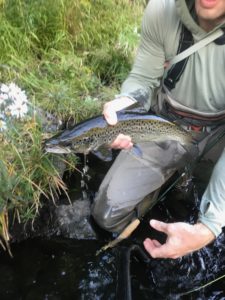
Catching fish on a dry fly is often the easiest method and lots of fun. You don’t need to have a boat or get way out there in a river. Take your time and observe for feeding fish then go and hunt. Keep it simple, don’t get too technical and fish a lot in June and July. I promise you’ll be happy with your results.
Aaron Broaddus
