
Maine Fly Fish

Muskies, Memories, and New Traditions
By Kevin McKay
There are certain things that run in families — stories, habits, and, if you’re lucky, fishing trips.
As a kid, I remember watching my dad head off each year with his buddies for their annual fishing trip. I couldn’t wait to be old enough to tag along. When that time finally came, those trips became a highlight of my young life. But like a lot of people, I drifted away as work, responsibilities, and life took over.
When I got older and more settled, I started the tradition again with my dad, his brother, cousins, and friends. Then kids came along, and everything changed once more. The trips shifted from being about me and my buddies to being about taking my own kids fishing.
Eventually, guiding consumed my schedule, and those annual adventures faded again.
Last fall, I decided it was time to bring them back — but this time, the mission was different. We weren’t chasing trout or bass. We were going after the fish of 10,000 casts — the musky.
The Plan
Maine isn’t exactly known for musky fishing, but that’s changing. Northern parts of the state, especially around Fort Kent, are gaining attention for this toothy predator. The region even hosts a catch-and-kill musky tournament that gives away thousands in prizes. Talk to the local guides and business owners, though, and you’ll hear the same opinion: it’s time to make it a catch-and-release event. These fish are here to stay — let’s build a trophy fishery.
This trip would be my restart — a new annual tradition. It was my oldest son9Tait), Zach Peirce, my friend, Matt Hornberger, and me. We planned for two days of fishing, with our buddy Tait joining the second day.
Day One: A Promising Start
We rolled up to the water around 10 a.m. on a cool October morning. Cell service was almost nonexistent, so I handed Matt a walkie-talkie before we split up.
Within ten minutes, the radio crackled: “I got one!”
Matt had landed his first musky — not a monster, maybe 25 inches, but a musky is a musky, and they all count.
Two casts later, I hooked up too, but the fish came unbuttoned before the net. Two hookups in the first half hour — not bad when you’re targeting a fish known for humbling even the most patient anglers.
By day’s end, Zach and I had around 20 follows. I landed two small ones, Zach lost two at the boat, and Matt never saw another. Later that night, a friend summed it up perfectly:
“That’s an epic day. Those are season-long numbers, not one-day numbers.”
Day Two: The Slow Burn
The next morning, Tait joined me, and Zach fished with Matt. With water levels low everywhere, we decided to explore new territory.
Zach had a follow right away and even brought one to the net before losing it. Tait never saw a fish, and I had a couple of half-hearted follows.
By the end of the day, it was clear both Zach and Tait were hungry for redemption. So, I threw out a wild idea.
“How about this — we leave my house at 4 a.m. next Saturday, drive north, fish for musky until 3, and be home by 8?”
By midweek, they both texted: We’re in.
The Marathon Day
At 4:02 a.m., we were on the road. Long drives like that have their own rhythm — quiet miles mixed with good conversation. We talked about past trips, scary driving stories, and where life’s taking us. Four hours passed fast.
Once on the water, I told the guys we’d take turns fishing. When someone caught a musky, we’d switch.
Zach made two casts before hooking up — and losing another fish. That made four lost muskies for him now. Moments later, Tait made three casts and had three separate follows. The fish were active, and we could feel the energy building.
Soon after, Tait hooked up and landed his first musky, a solid 26-incher. On a fly rod, every musky is hard-earned. Casting 10- to 12-weight rods with big flies and sinking lines wears you out fast, but that day, the work was paying off.
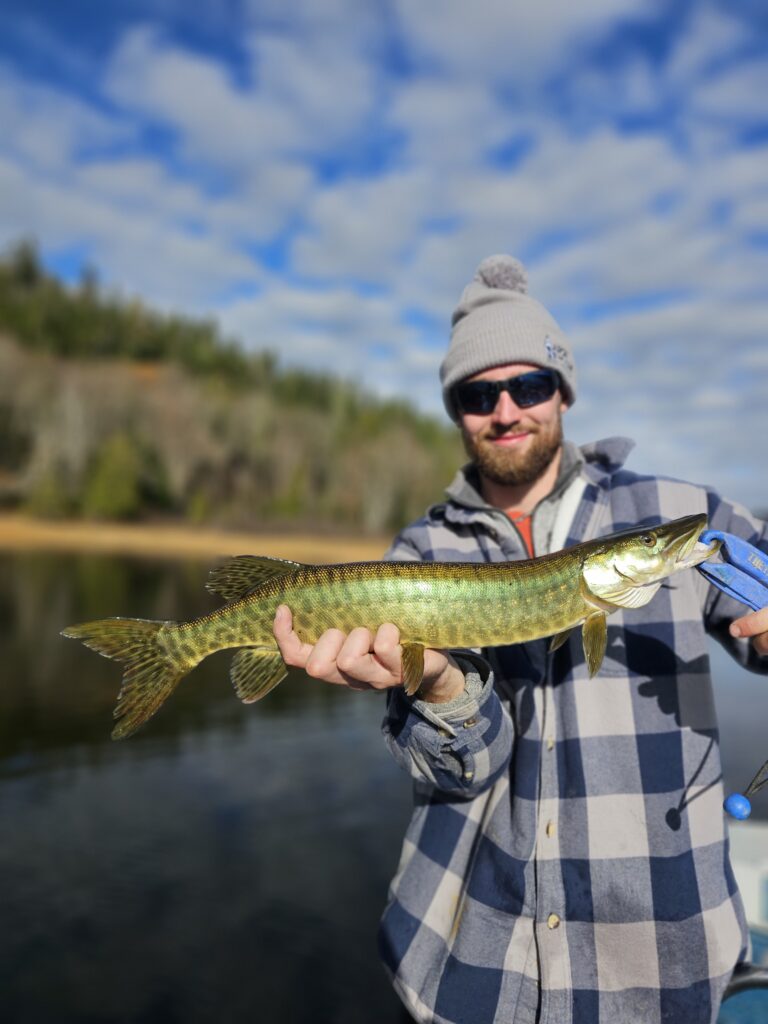
Later, I had a musky follow my fly right to the boat. I told Zach to cast ahead with a different color. The fish darted toward his fly but didn’t eat. That’s musky fishing — excitement and heartbreak, cast after cast.
We went back to one of our hot spots from the week before. Zach hooked up again — and again, lost it. Not long after, both of us hooked up at the same time… and both lost our fish.
It was becoming a comedy of errors, but we couldn’t stop laughing.
Around 1 p.m., I told Zach, “You’ve got two hours left to get your fish.”
Seconds later, he called out, “I’ve got one!”
This time, everything came together. He set the hook hard, stayed tight, and slid his first musky into the net. We erupted — high fives, whoops, and pure relief.
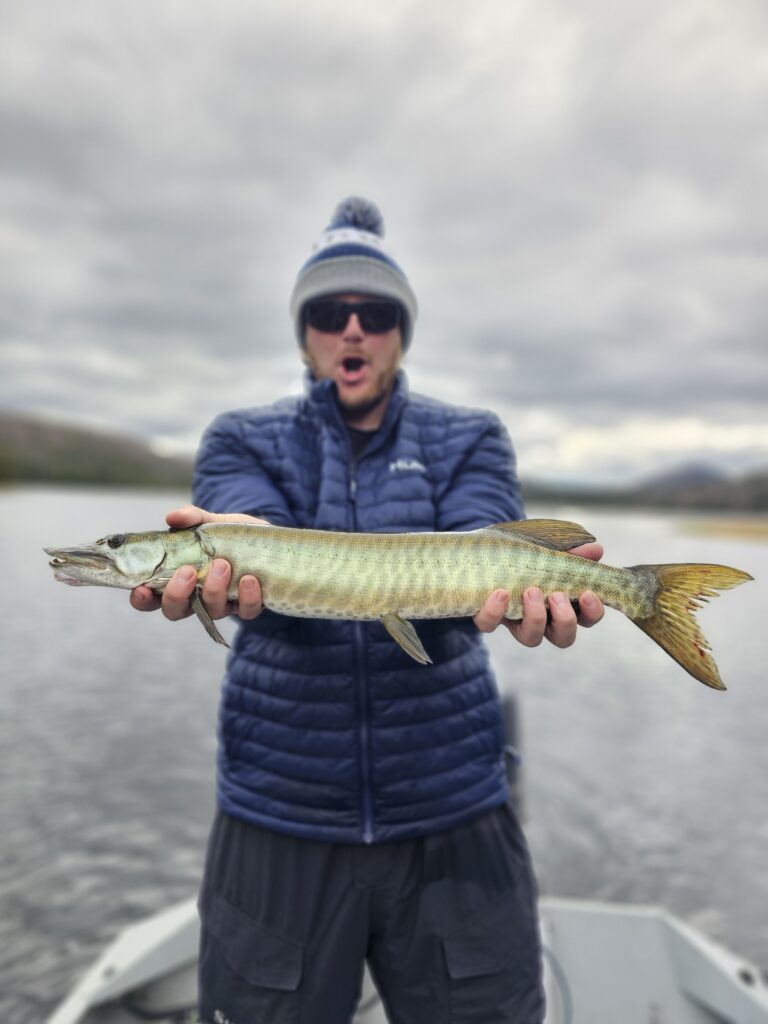
My Turn
Earlier that day, I’d seen a big musky roll on my fly near the boat. I went back to that area and tied on the same pattern that’s caught all my 30-inch-plus fish.
“Are you ready?” I told Zach. “I’m going to catch a 30-incher.”
Halfway through the retrieve, nothing. Twenty feet from the boat, a musky materialized like a ghost and inhaled the fly. Chaos. A few moments later, the fish slid into the net — a thick, beautiful 33-inch musky.
We yelled like kids at Christmas.
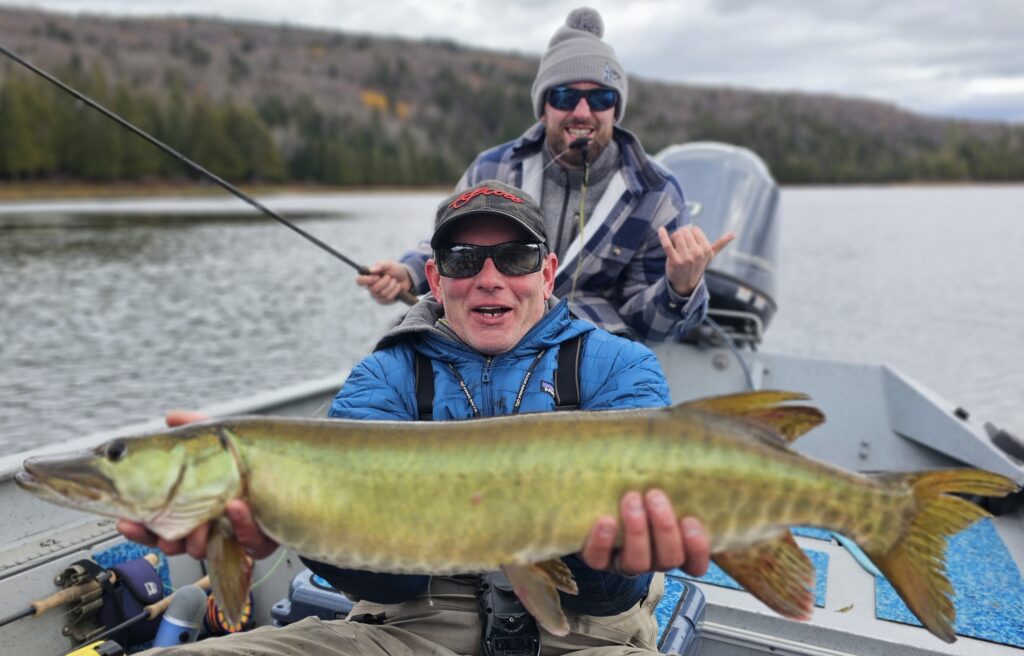
A Wild Finish
We’d been recording a podcast throughout the day. As we were talking about my fish, Tait suddenly said, “There’s one following!”
I spooked it while recording, so I shut the mic off at 1:36. On the very next cast — at 1:38 — a musky ate right beside the boat. Water exploded, I scooped it into the net, and we fired the podcast back on, laughing and shouting.
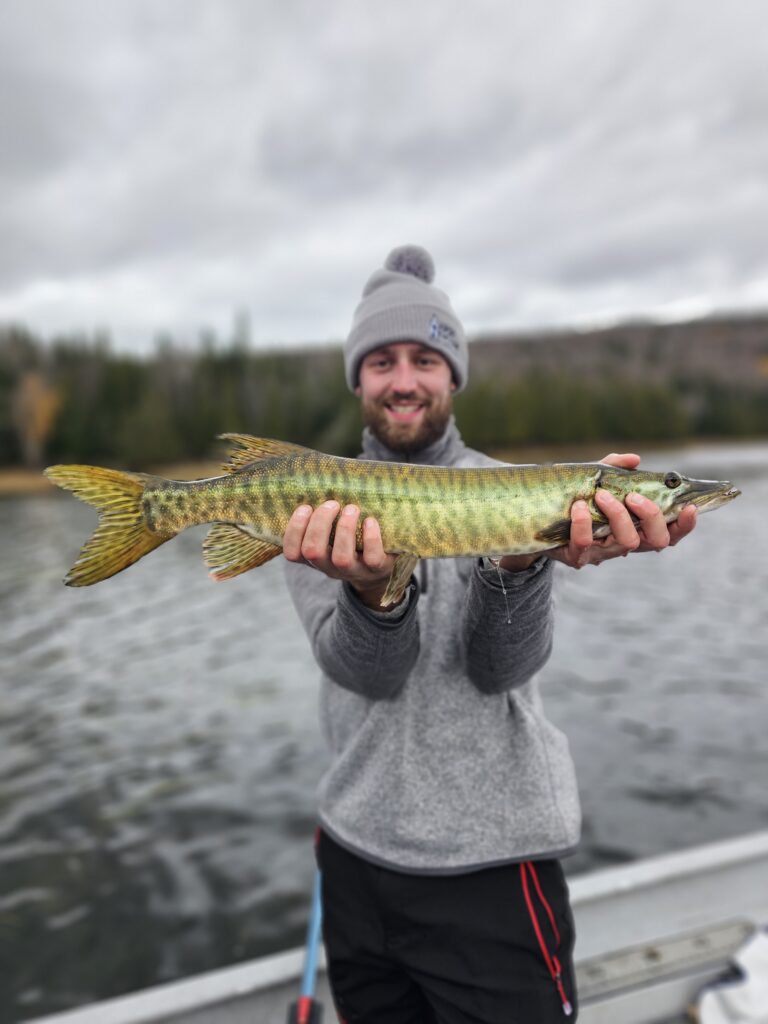
In five and a half hours, we’d had 25 follows and landed four muskies. That’s a phenomenal day of musky fishing anywhere.
The drive home was full of tired smiles and quiet satisfaction. We’d set out to restart a tradition — and did it in the best way possible.
If you don’t go, you’ll never know. And if you want to become a better fly angler, fish for everything — and give those brook trout a break once in a while.
Kevin McKay is a registered Maine guide, owner of Maine Fishing Adventures, and founder of Maine Fly Fish, one of the largest fly-fishing communities on the East Coast.
