

Maine Fly Fish
By Kevin McKay
The thermometer read 48 degrees, and the leaves were just beginning to burn with fall color. For most anglers, that means one thing—brook trout season. But for me, my mind turns to bronze backs. Big, heavy fall smallmouth bass.
A lot of folks think of smallmouth as a warmwater species. In truth, I’ve come to see them as more like trout. When the days shorten and the nights cool, smallmouth feed hard, sensing winter’s approach. Their metabolism is slowing, and instinct tells them it’s time to bulk up before the cold sets in. Fall, I’ve learned, can be the best time to find the biggest fish of the year.
The Last Trip
My final guided trip of the season wasn’t for trout—it was with a father and daughter from New Hampshire. Tom has been a client of mine off and on for nearly twenty years. He reached out late in the season, hoping to squeeze in one more adventure before the snow flew. His daughter, Tapashi, had been talking about fishing all year, and with the calendar slipping away, he wanted to make it happen.
I usually wrap up guiding by the end of September. Maybe I’ll sneak in a musky trip or two, but October and November are reserved for my own fishing. Still, when I heard the reason for the trip, I couldn’t say no.
I invited them up the night before and told them we could hang out in the tiki bar. Normally, I offer free lodging with multi-day bookings, but since it was a long drive for a half-day trip, it just made sense. The night was full of laughter, fishing stories, and good company—exactly the kind of evening that reminds me why I love this job.
A Cold Morning and a New Plan
We hit the river by 8 a.m. on a crisp October morning. Overnight temps had dropped, and the water was ten degrees colder than the week before. My plan was to target the deepest sections of the river—classic wintering holes where smallmouth typically start stacking up as temperatures fall.
But like most good plans in fishing, that one didn’t pan out.
The first hour was slow, almost eerily quiet. What I thought would be an easy four-hour trip turned into a game of hide-and-seek. When we finally found fish, they weren’t in the deep water at all.
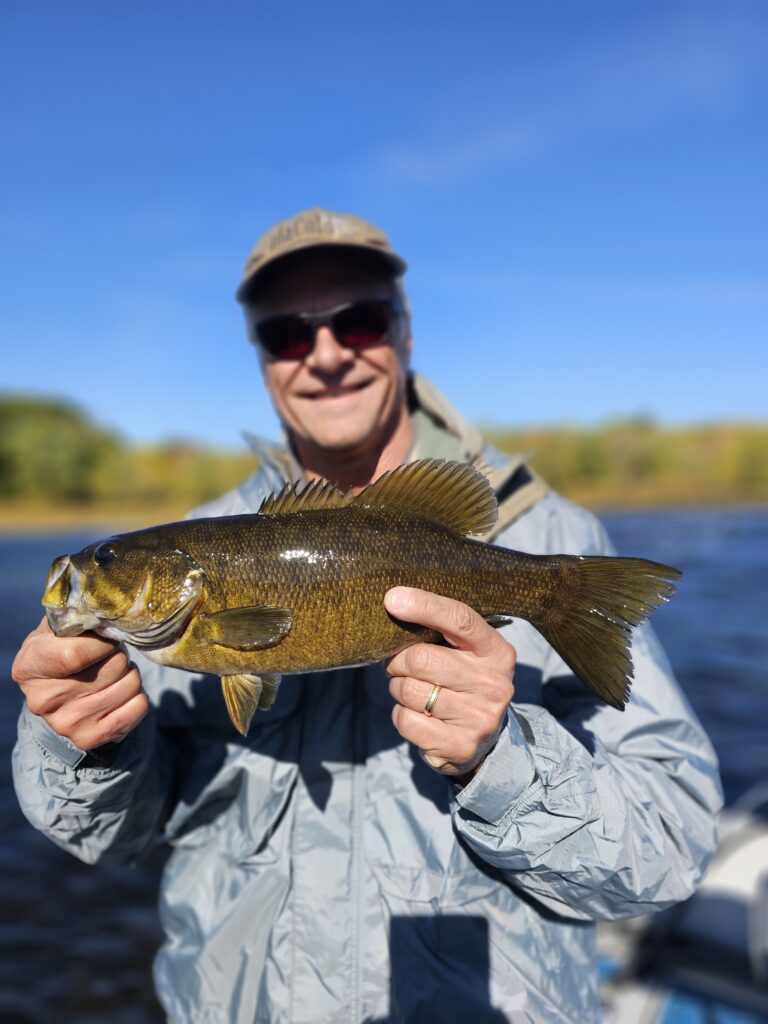
Instead, the bass were sitting in the sunlit shallows, in just one to three feet of water. A few even held in faster current—something I didn’t expect on a cold morning. But thinking it through, it made sense. These weren’t staging fish—they were feeding fish. The warmer water and sunlight drew in bait, and the smallmouth followed.
Finding the Groove
We weren’t fly fishing that day; we used spinning gear since Tapashi’s experience had mostly been with a worm and bobber. Once she got the hang of casting and working a lure, she started catching fish—and fast. She quickly caught her most fish ever, several different species, and her biggest smallmouth to date, a solid 16-incher.
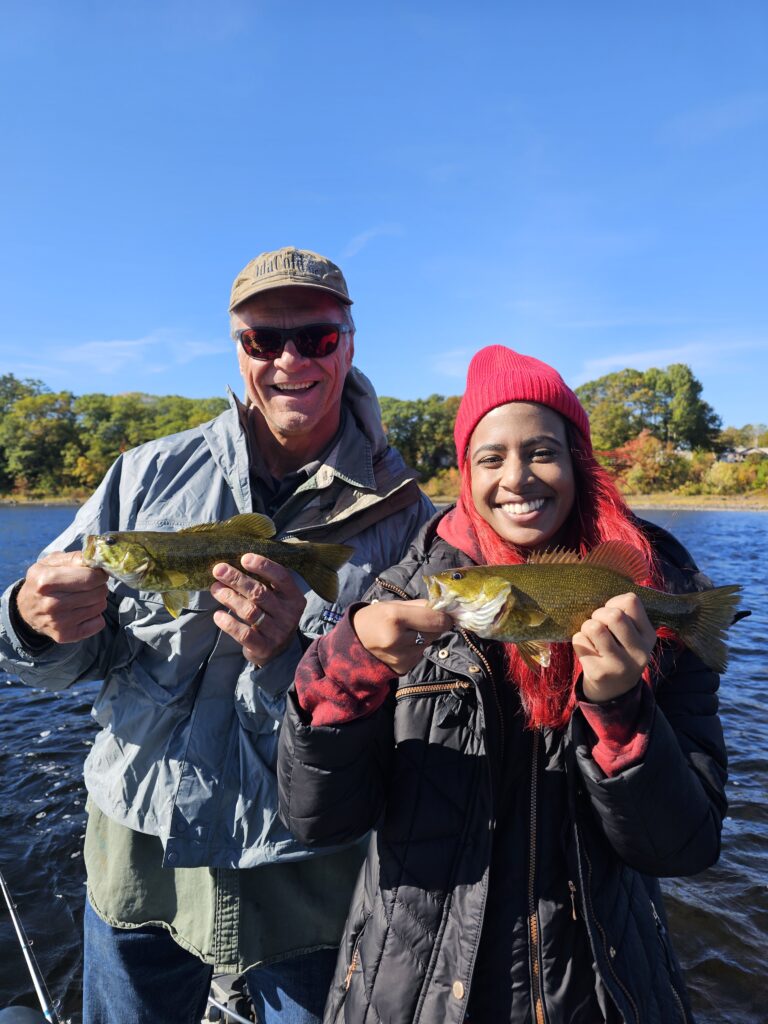
The morning warmed up, and so did the action. Soon they were doubling up, laughing, and cheering each other on. Watching them, I couldn’t help but smile. This was what it’s all about.
Still, I had one last goal: to get her on a true trophy smallmouth.
The Big One
I took them to a stretch where I’d been catching a mix of bass, crappie, and pickerel—a fast run littered with logs and shadow lines. You could actually watch the fish move among the wood, chasing their lures. It was an incredible sight.
We were running short on time, and Tapashi was getting tired. She’d already exceeded every goal, but I wasn’t ready to quit. I had one more spot in mind—a shallow run that deepened gradually to three feet. The current slowed just enough to make it perfect holding water.
We started at the edge of the faster flow and worked toward shore. I had them cast to deeper water and retrieve toward the boat. Often, the hit comes right at your feet—or in this case, just off the stern. They caught a few more fish, but nothing big.
As we eased closer to shore, I lined the boat up near a large rock with a log jammed against it. It’s a spot that’s produced plenty of 16- to 18-inchers over the years. Tapashi made a perfect cast, hooked up, and lost the fish. I told her to throw again.
On her next cast, the lure stopped dead.
“Are you snagged?” I asked.
“I don’t think so,” she said, just as her line came to life.
The fish broke the surface in a full jump. I turned to Tom and grinned. “That’s a 20-incher!”
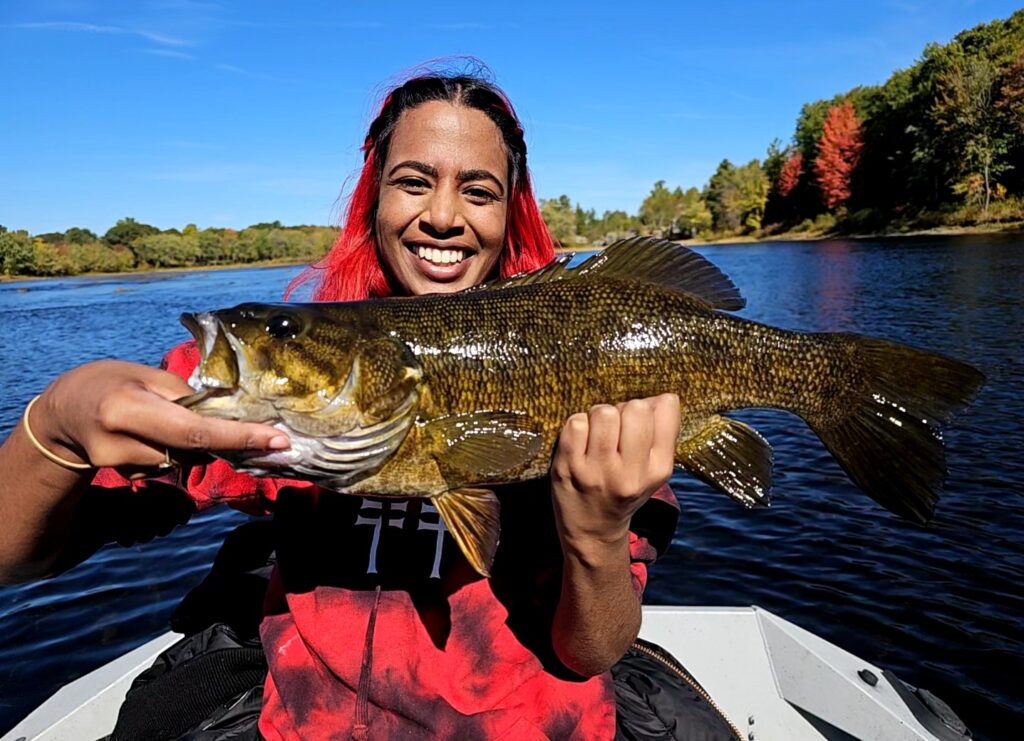
What followed was a textbook fight. She kept the pressure on, stayed calm, and listened to every word I said. When the bass finally slid into the net, I laid it on the ruler—exactly twenty inches.
A true river trophy.
We bumped fists, snapped a few quick photos, and released her back into the current. Watching that fish swim away felt like the perfect ending—not just to the day, but to my entire guiding season.
Why We Do It
Trips like that remind me why I guide. It’s not about numbers, or even size—it’s about moments. Watching a father and daughter laugh, share success, and build a memory they’ll talk about for years—that’s the real reward.
Tapashi caught her most fish ever, her biggest fish ever, and experienced the thrill of a true trophy smallmouth. And for me, being part of that story was the best catch of all.
